

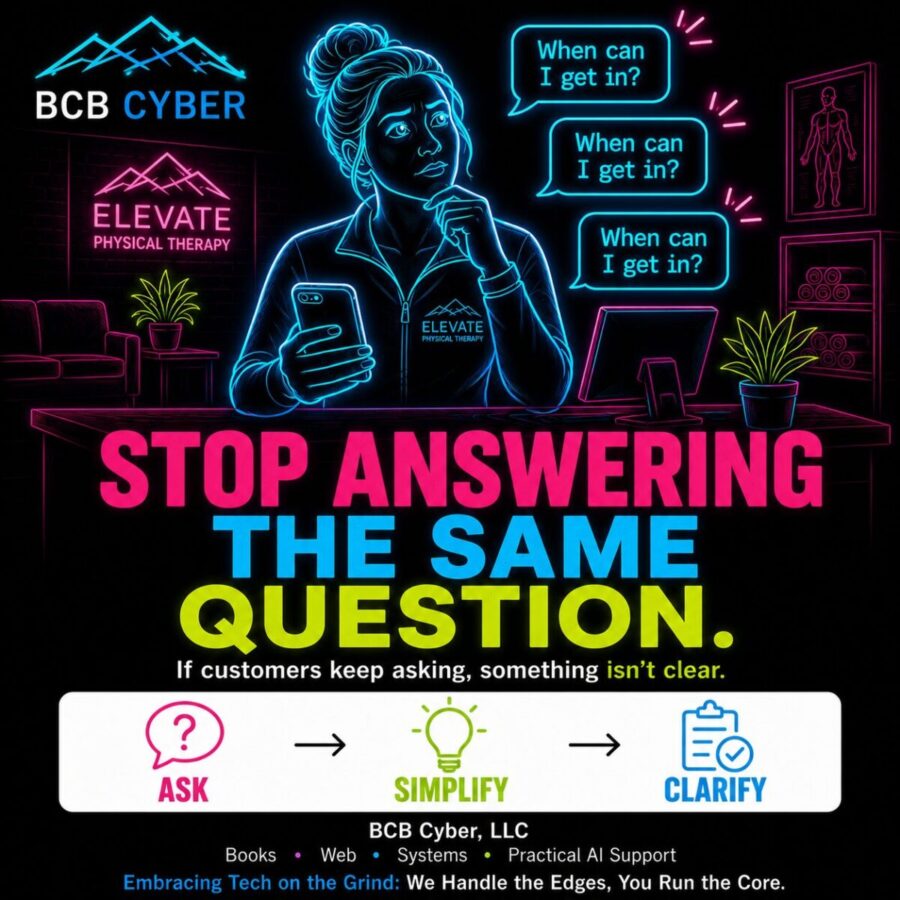

A question came in. Then another. Then another.
Same question. Same answer. Different customer.
At first, most business owners don’t think much about it. That’s just part of running a business. But eventually, a realization starts to form. What if the question isn’t the problem? What if the question is the clue?
The Question Behind the Question
Customers don’t wake up looking for reasons to contact your business. Most would rather find the answer themselves. Which means when they reach out, they’re often telling you something important.
They couldn’t find what they needed. They weren’t sure what to do next. They didn’t understand the process. Or they simply needed more clarity.
The question isn’t creating friction. The question is revealing friction.
Repetition Is Information
One of the fastest ways to improve a business is to pay attention to repetition. The same question. The same confusion. The same hesitation. The same misunderstanding.
Patterns matter.
Because patterns point to systems. And systems create results.
Where Repeated Questions Usually Come From
Most recurring customer questions originate from one of four places:
Missing Information
Customers can’t find what they’re looking for.
Unclear Communication
The information exists, but isn’t easy to understand.
Weak Onboarding
Customers don’t know what happens next.
Website Friction
Visitors can’t quickly find answers.
The result is always the same. They reach out. And ask. Again.
The Website Connection
This lesson shows up constantly during website reviews. Business owners often believe information is obvious because they already know where everything is. Customers don’t.
A customer visiting your website for the first time doesn’t have context. They don’t know your process. They don’t know your terminology. They don’t know what happens next.
If they keep asking the same question, your website may be trying to tell you something.
Fix the Source, Not the Symptom
Many businesses solve repeated questions one customer at a time. Answer the email. Answer the call. Answer the text. Repeat.
A stronger approach is identifying the source of the confusion and improving it. Update the website. Add an FAQ. Improve onboarding. Clarify expectations. Document the process. The goal isn’t becoming faster at answering the question.
The goal is making the question unnecessary.
The Hidden Opportunity
Every repeated question represents an opportunity.
An opportunity to improve clarity, reduce interruptions, strengthen trust, improve customer experience, and simplify operations.
Most business improvements don’t begin with complicated strategies. They begin with paying attention.
Final Thought
Customers are constantly telling us where confusion exists. Not through complaints. Not through criticism. Through questions.
And sometimes the most valuable business insight isn’t hidden in a report or dashboard. It’s sitting in your inbox. Waiting to be noticed.
Tiny Framework
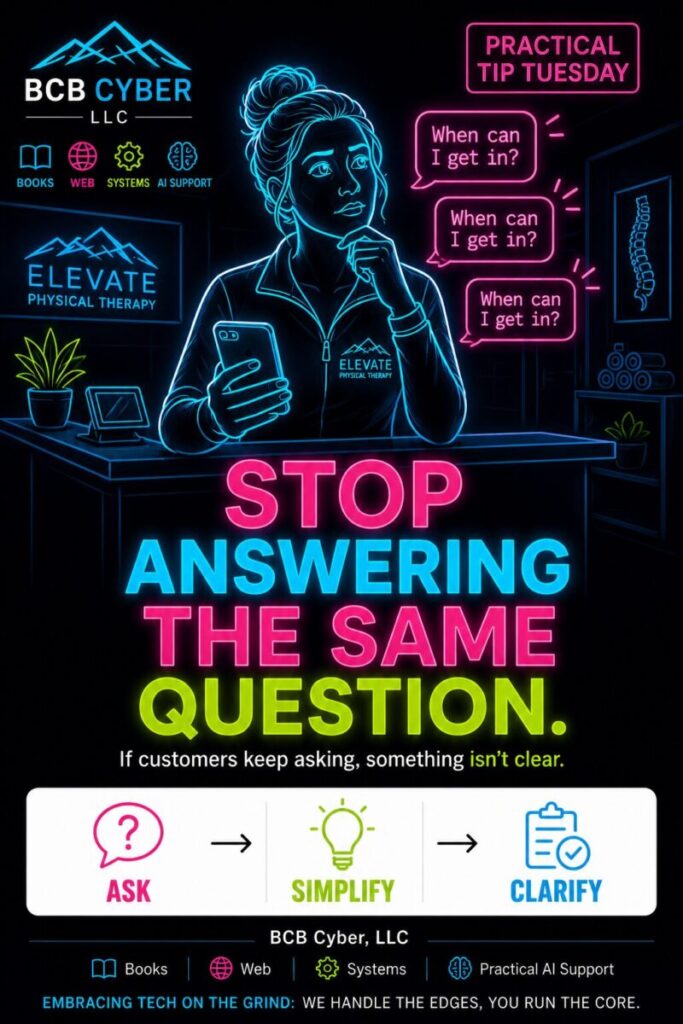
ASK
What keeps getting asked?
SIMPLIFY
Make the answer easier to find.
CLARIFY
Answer it before customers ask.
BCB Cyber, LLC
•Books
•Web
•Systems
•Practical AI Support
Embracing Tech on the Grind: We Handle the Edges, You Run the Core. 🚀
Frequently Asked Questions
Why do customers ask the same questions repeatedly?
Repeated questions usually indicate missing information, unclear communication, or a process that isn’t obvious to customers.
Are repeated customer questions a bad thing?
No. Repeated questions are valuable feedback because they reveal where customers need more clarity.
How do I identify recurring customer questions?
Review emails, text messages, contact forms, phone calls, reviews, and sales conversations for common themes.
What should I do when I notice a repeated question?
Look for ways to answer it earlier through your website, onboarding process, estimates, proposals, or FAQs.
Can repeated questions indicate website problems?
Yes. If visitors can’t find information easily, they often contact the business directly to ask.
What is customer friction?
Customer friction is anything that creates confusion, uncertainty, delays, or unnecessary effort during the customer experience.
Should I create an FAQ page?
Yes. FAQ pages can reduce repetitive questions, improve customer confidence, and strengthen website usability.
Can automation help answer repeated questions?
Absolutely. Chatbots, automated email responses, knowledge bases, and FAQs can reduce repetitive communication.
What’s the biggest mistake business owners make with recurring questions?
Treating them as interruptions instead of viewing them as opportunities to improve communication.