

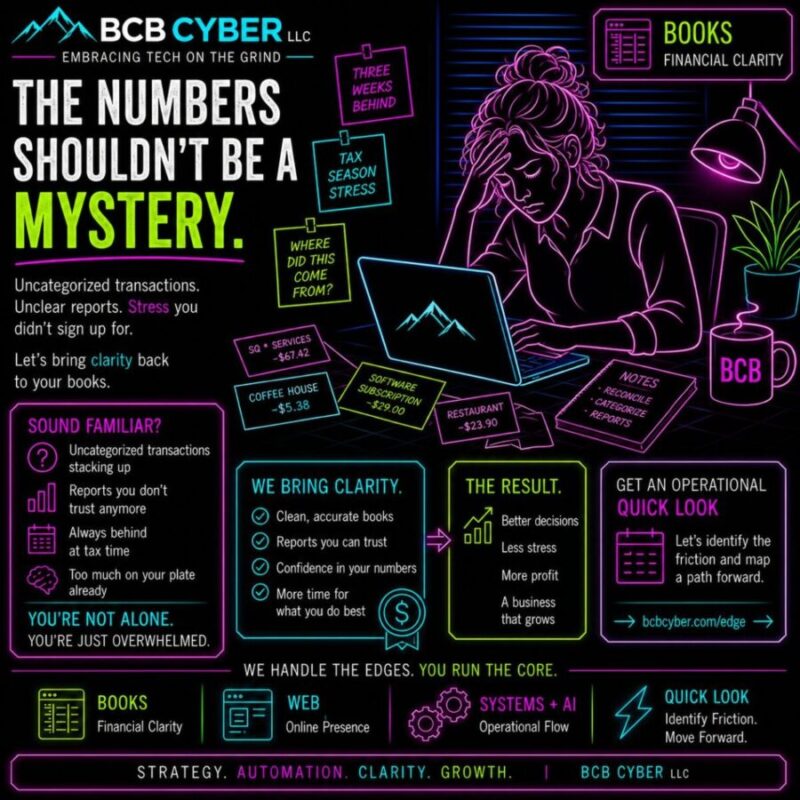

There is a very particular kind of stress that appears when the numbers stop making sense. Not dramatic panic. Not cinematic collapse. Just a slow-growing sense that opening QuickBooks may now qualify as an emotional event.
At first it seems harmless. A transaction here. A delayed reconciliation there. One expense you mean to categorize later. Then eventually the reports start feeling… suspicious.
And once the reports feel suspicious, every business decision becomes slightly heavier.

The Mystery Transaction Problem
Most businesses eventually encounter transactions that look like they were generated by a secret society. Examples include:
SQ * SERVICES
INTL PROCESSING
SUBSCRIPTION
PAYMENT CLOUD
Very helpful. Especially when nobody remembers signing up for half of them!
So now the business owner is left sitting there wondering:
“Is this important, fraudulent, tax-deductible, or emotionally symbolic?”
This is not ideal operational clarity.
Falling Behind Happens Quietly
Most bookkeeping problems don’t start because someone is irresponsible. They start because business owners are busy doing the actual business. Massage therapists are helping clients. Contractors are on job sites. Gym owners are coaching people. Breweries are trying to survive inventory math, which may actually be its own branch of advanced science fiction.
Meanwhile bookkeeping waits patiently in the corner gathering emotional weight.
Once The Numbers Feel Wrong, Decisions Get Harder
This is the part people often underestimate. Financial clarity isn’t just about taxes.
It affects everything: confidence, planning, hiring, pricing, growth decisions, and stress levels.
If reports don’t feel trustworthy, decision-making becomes guesswork. And guesswork tends to make long weeks feel even longer.

Small Cleanup Steps Matter
Fortunately, clarity returns faster than most people expect.
Usually the solution isn’t:
“Completely rebuild your business.”
It’s smaller: categorize transactions, reconcile accounts, clean up reports, and create consistency.
Tiny operational improvements stack up surprisingly fast, rather like coffee cups on a business owner’s desk.
The Real Goal Isn’t Perfect Books
Most small businesses don’t actually need perfect accounting systems worthy of a multinational corporation.
They need:
✓ clean information
✓ understandable reports
✓ confidence in the numbers
✓ less stress
✓ more time for the real work
That’s the real value of financial clarity.
Not perfection.
Confidence.

And in our increasingly tech-driven little future—where every app, platform, dashboard, subscription, and blinking notification wants your attention—clarity becomes a competitive advantage.
Better systems create less friction.
Less friction creates more room to actually build something worthwhile.
BCB Cyber
Books • Web • Systems • Practical AI Support
We Handle The Edges. You Run The Core.