

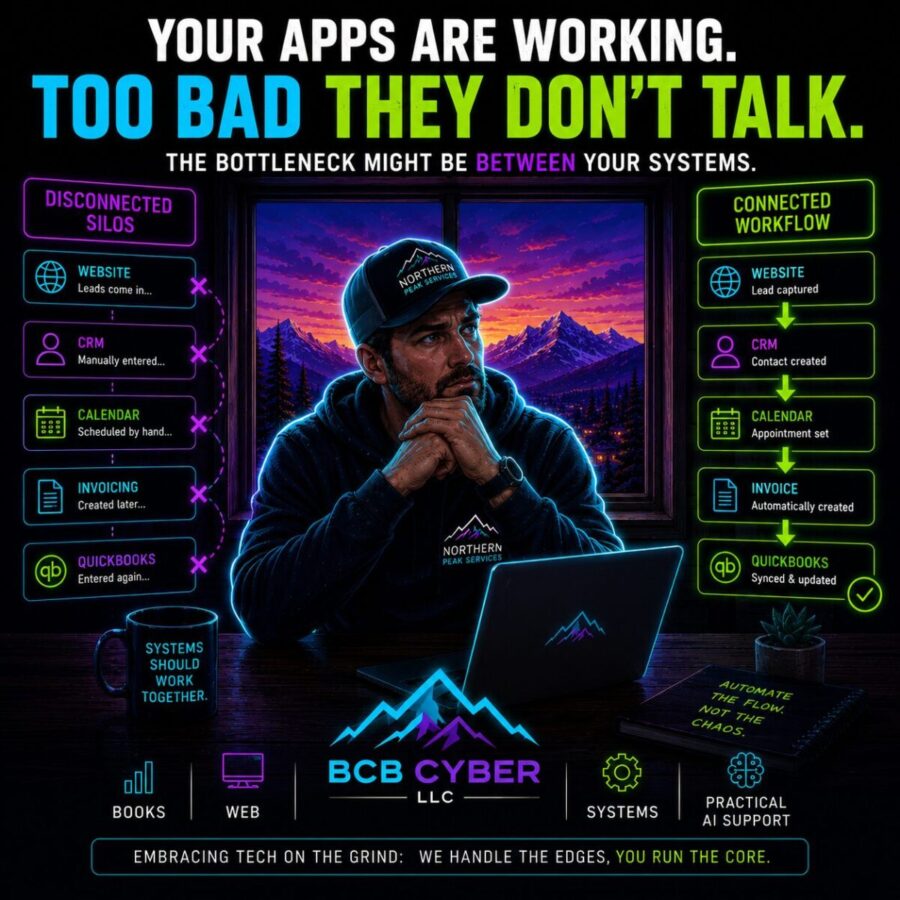

Technology has never been more accessible. Small businesses now have tools for:
- Marketing
- Scheduling
- CRM
- Accounting
- Communication
- Reporting
Yet many business owners still feel overwhelmed. The problem often isn’t the tools. The problem is that the tools operate independently.
Today’s Story: Marcus and the Double Entry Problem
Marcus thought adding more software would solve his operational challenges. Every time a problem appeared, he found a new app.
Need scheduling? Add a scheduler. Need customer management? Add a CRM. Need invoicing? Add accounting software.
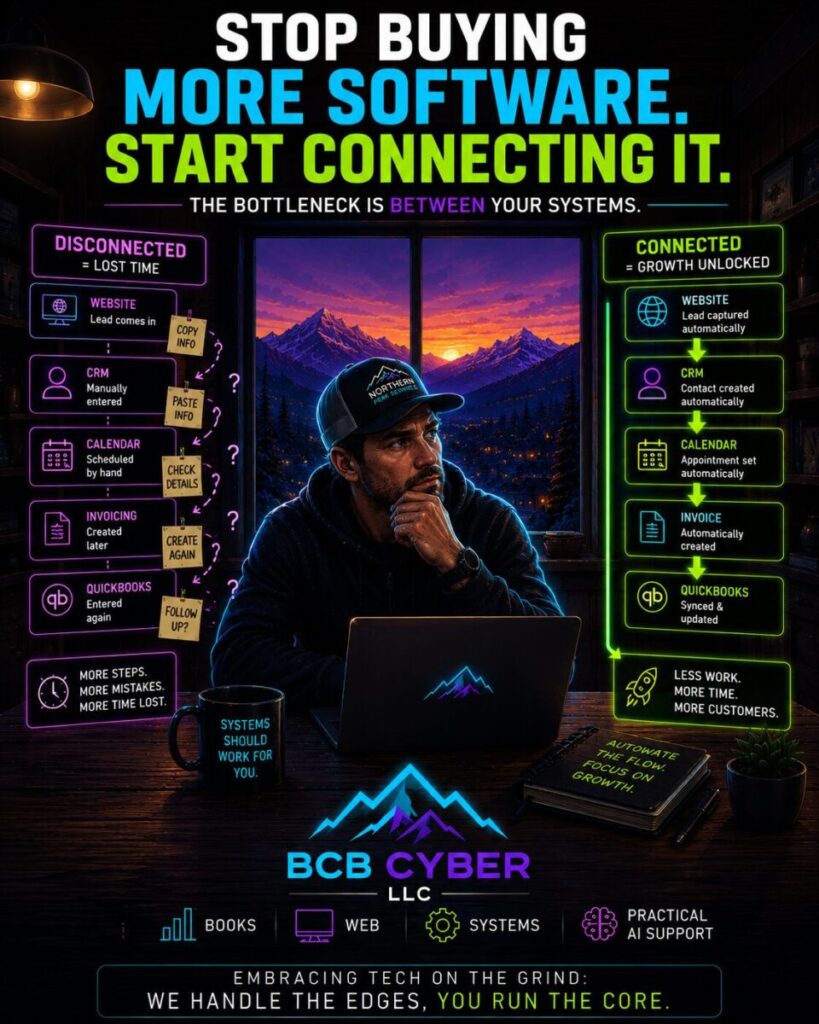
Eventually he had a powerful collection of tools. Unfortunately none of them communicated effectively. Customer information had to be manually moved between systems. Follow-up tasks were recreated repeatedly. Invoices required duplicate entry.
By the end of each week Marcus wasn’t running his business. He was acting as the bridge between software platforms. Eventually he realized something important.
The issue wasn’t capability.
The issue was connectivity.
The Hidden Cost of Disconnected Systems
Disconnected systems create:
- Duplicate entry
- Missed follow-up
- Delayed communication
- Increased mistakes
- Operational friction
These costs are often invisible because they happen gradually.
Where Bottlenecks Usually Appear
Common bottlenecks include:
- Website leads not reaching CRM systems
- CRM updates not triggering follow-up
- Appointments not creating tasks
- Completed jobs not creating invoices
- Reports requiring manual compilation
Why Integration Matters
Connected systems create consistency.
Information moves automatically. Processes become predictable. Business owners spend less time coordinating software and more time helping customers.
Start With One Workflow
You don’t need to automate everything. Start with one recurring process.
Lead capture. Appointment scheduling. Invoice creation. Customer follow-up. Small wins create momentum.
Back to Marcus
Marcus still uses many of the same tools today.
The website didn’t change. The CRM didn’t change. QuickBooks didn’t change.
The difference is what happens between them.
Leads flow automatically. Appointments trigger actions. Customer information stays synchronized. Invoices are created faster. The software didn’t become better.
The connections became better.
And that’s often where the biggest gains are found.
BCB Cyber, LLC
📊 Books • 🖥️ Web • ⚙️ Systems • 🧠 Practical AI Support
Embracing Tech on the Grind: We Handle the Edges, You Run the Core.
Frequently Asked Questions
What is business systems integration?
Business systems integration connects software platforms so information can move automatically between them.
Why do businesses struggle with disconnected software?
Many tools are implemented individually without considering how information will flow between them.
Does every business need automation?
Not necessarily, but most businesses benefit from reducing repetitive manual work.
What processes are easiest to automate?
Lead capture, scheduling, notifications, follow-up communication, and reporting are common starting points.
Can small businesses benefit from system integration?
Absolutely. Small businesses often experience the greatest efficiency gains because owners wear multiple hats.
What is the biggest benefit of integration?
Reducing manual work while improving consistency and accuracy.