

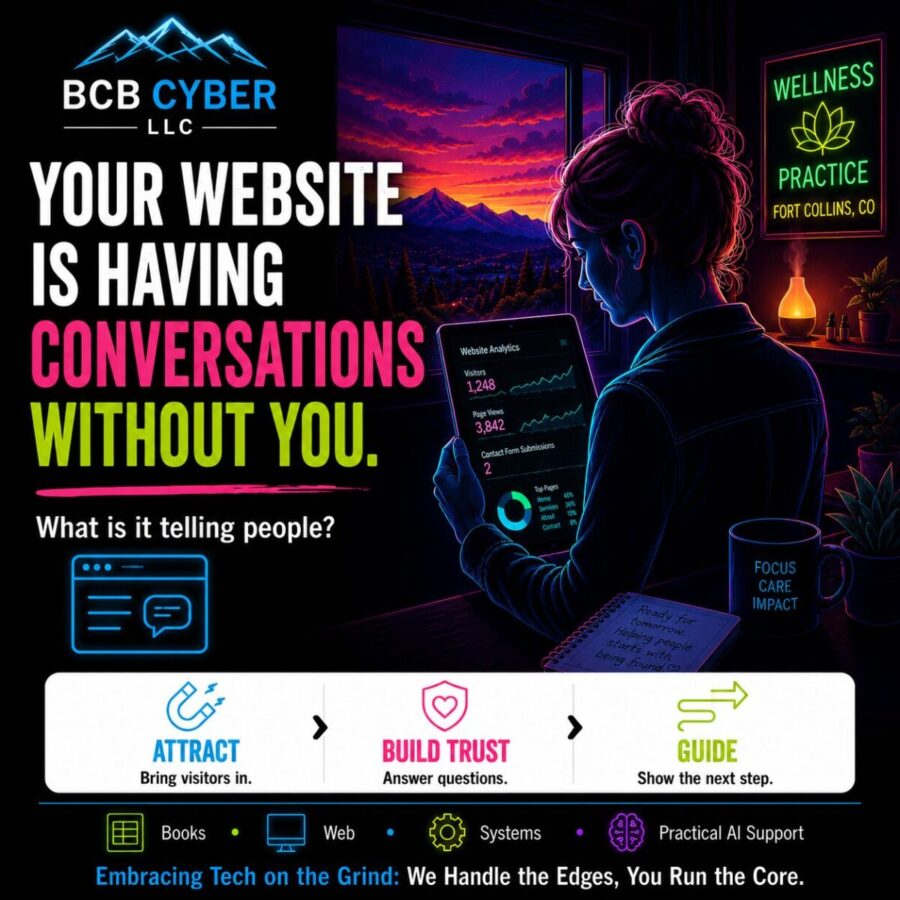

As the last appointment wrapped up for the day, Rachel sat alone in her wellness office watching the evening light fade across the Front Range.
The website analytics on her tablet weren’t terrible. Visitors had arrived. Pages had been viewed. People were spending time on the site.
But almost nobody was reaching out.
At first, she assumed she needed more traffic. Then she realized something. The website already had visitors.
The problem wasn’t attracting attention. The problem was what happened after people arrived.
Every Visitor Arrives With Questions
Most website visitors aren’t looking for a website. They’re looking for answers.
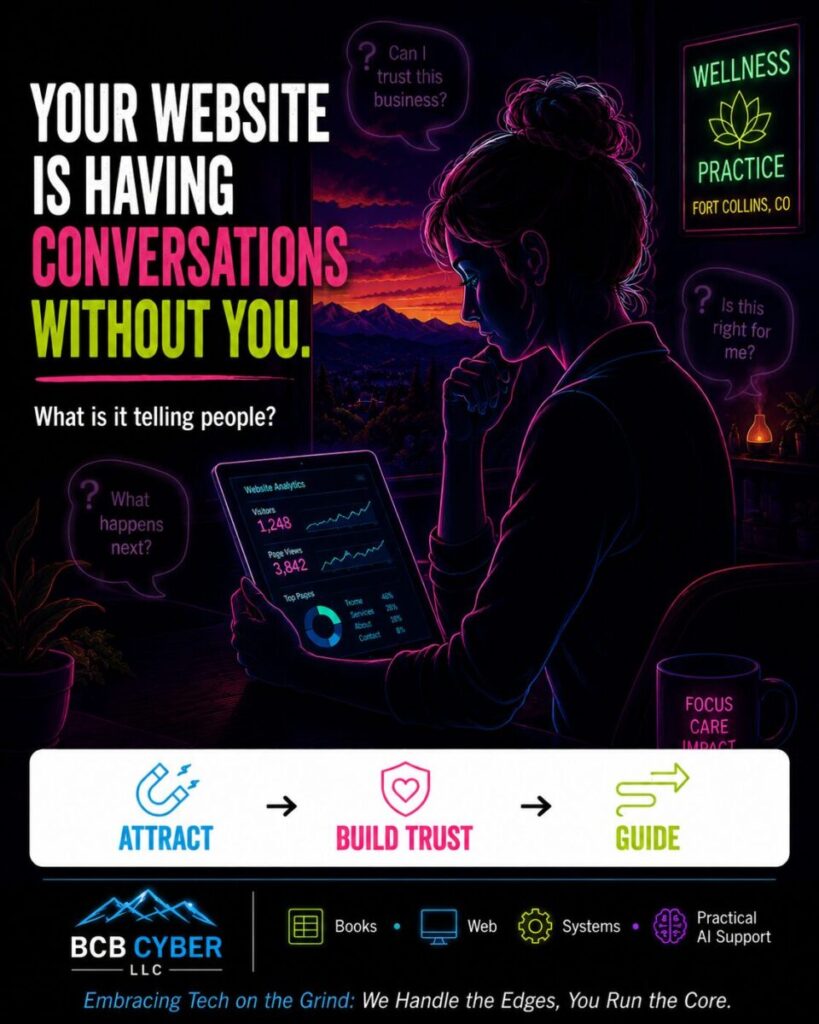
They want to know… Can this business help me? Can I trust them? What happens next? How do I get started?
Every visitor begins a conversation the moment they land on your website. The question is whether the website is answering those questions clearly.
A Common Front Range Business Challenge
One pattern we’ve noticed among many Northern Colorado service businesses is that owners know their business so well they accidentally skip important context.
What feels obvious to the owner often isn’t obvious to the visitor. A contractor knows what happens after a quote request. A wellness provider knows how intake works. A consultant knows the next step in the process.
The visitor doesn’t.
When information feels incomplete, uncertainty appears. And uncertainty usually ends the conversation.
Traffic Doesn’t Create Trust
Many business owners focus on traffic. More visitors. More clicks. More impressions. Those things matter. But traffic alone doesn’t create leads.
Trust creates leads.
Visitors need confidence before they take action.
That confidence comes from: clear messaging, trust signals, helpful explanations and visible next steps. Without those elements, visitors often leave quietly.
The Conversation Most Owners Never Hear
One of the challenges with websites is that owners rarely hear the conversation happening in a visitor’s head.
Visitors are constantly asking:
Am I in the right place?
Can this business solve my problem?
Is this worth my time?
What should I do next?
Every page either answers those questions or creates more uncertainty.
Why Good Websites Feel Easy
The best websites often don’t feel impressive. They feel easy.
Visitors quickly assess and are able to understand what the business does, who it helps, why they should trust it, and how to move forward. Nothing feels confusing. Nothing feels hidden.
The conversation flows naturally.
A Pattern We See Across Northern Colorado
Whether it’s a wellness practice in Fort Collins, a contractor in Loveland, or a service business in Greeley, one thing appears consistently: the strongest websites reduce uncertainty. They don’t overwhelm visitors. They don’t try to say everything.
They focus on helping people understand what matters most.
Clarity beats complexity. Almost every time.
Final Thought
Your website is already talking to potential customers. Every day. Every hour. Every visit.
The question isn’t whether the conversation is happening.
The question is what the conversation sounds like.
Because if visitors leave confused, uncertain, or unsure of what to do next, the conversation is ending before it ever really begins.
Tiny Framework
ATTRACT
Bring visitors in.
BUILD TRUST
Answer questions.
GUIDE
Show the next step.
Footer
BCB Cyber, LLC
📊 Books • 🖥️ Web • ⚙️ Systems • 🧠 Practical AI Support
Embracing Tech on the Grind: We Handle the Edges, You Run the Core.
Frequently Asked Questions
Why isn’t my website generating leads?
Many websites receive visitors but fail to answer questions clearly enough to build trust and encourage action.
What is website friction?
Website friction is anything that creates confusion, uncertainty, or unnecessary effort for visitors.
How do I know if my website is confusing?
Ask someone unfamiliar with your business to explain what you do after spending 15 seconds on your homepage.
Is website design the most important factor?
Not usually. Clarity, trust, and clear next steps often matter more than visual design alone.
Why do visitors leave websites quickly?
Visitors often leave when they can’t quickly understand what a business does, who it helps, or what they should do next.
How can I improve website conversions?
Focus on clarity, trust signals, simple navigation, and clear calls to action.
What are trust signals on a website?
Reviews, testimonials, certifications, contact information, photos, and clear explanations all help build trust.
How often should I review my website?
At least quarterly, or whenever you update services, pricing, offers, or customer processes.
What is a Website Health Review?
A Website Health Review evaluates clarity, trust, usability, performance, and conversion opportunities.
What is the biggest website mistake small businesses make?
Building a website around what they want to say instead of what visitors need to know.